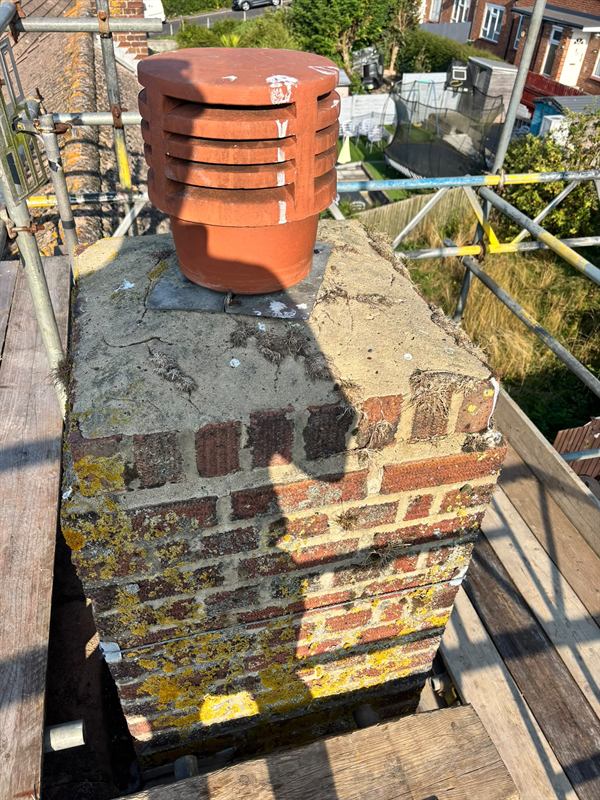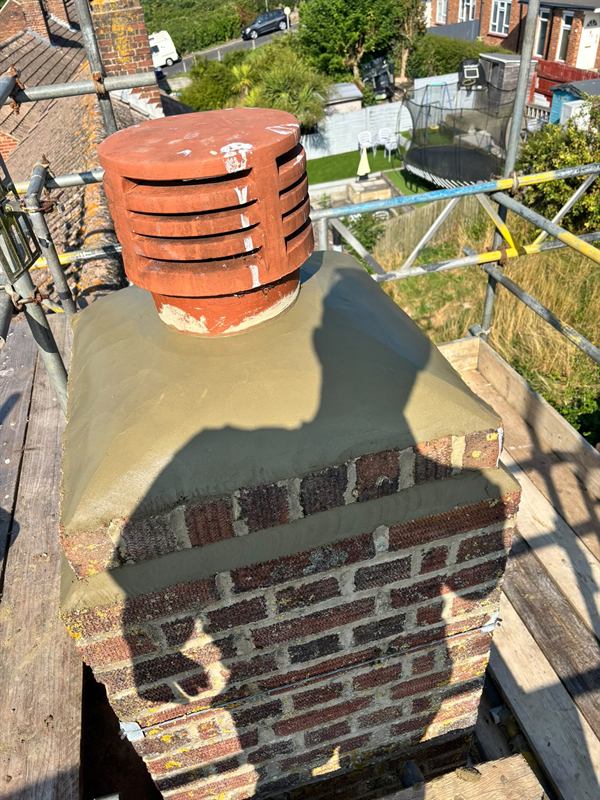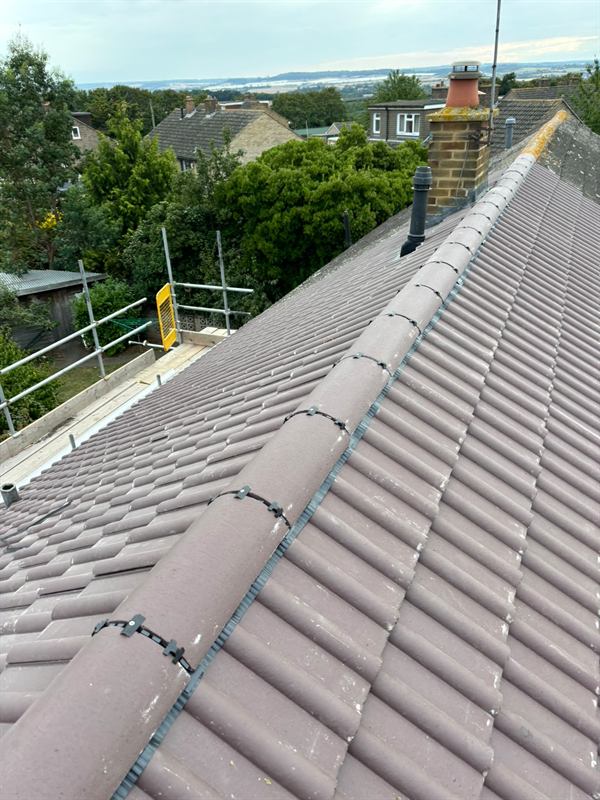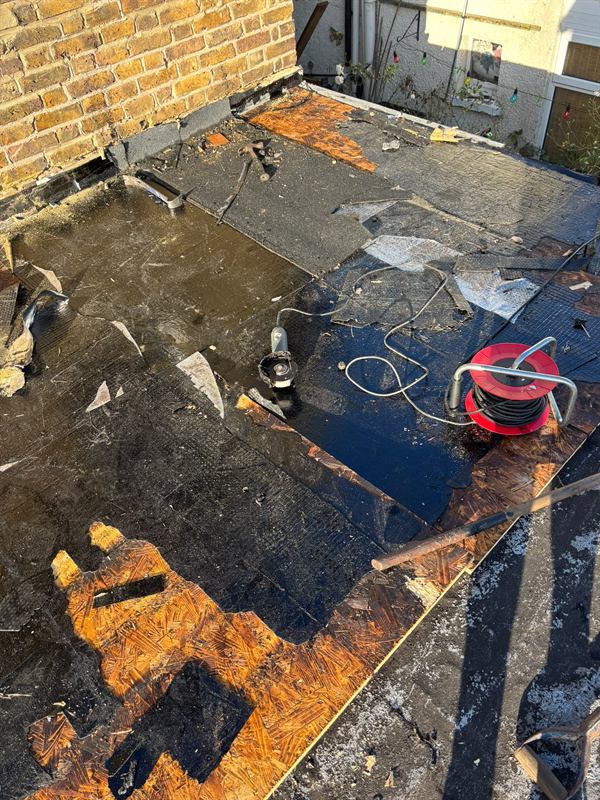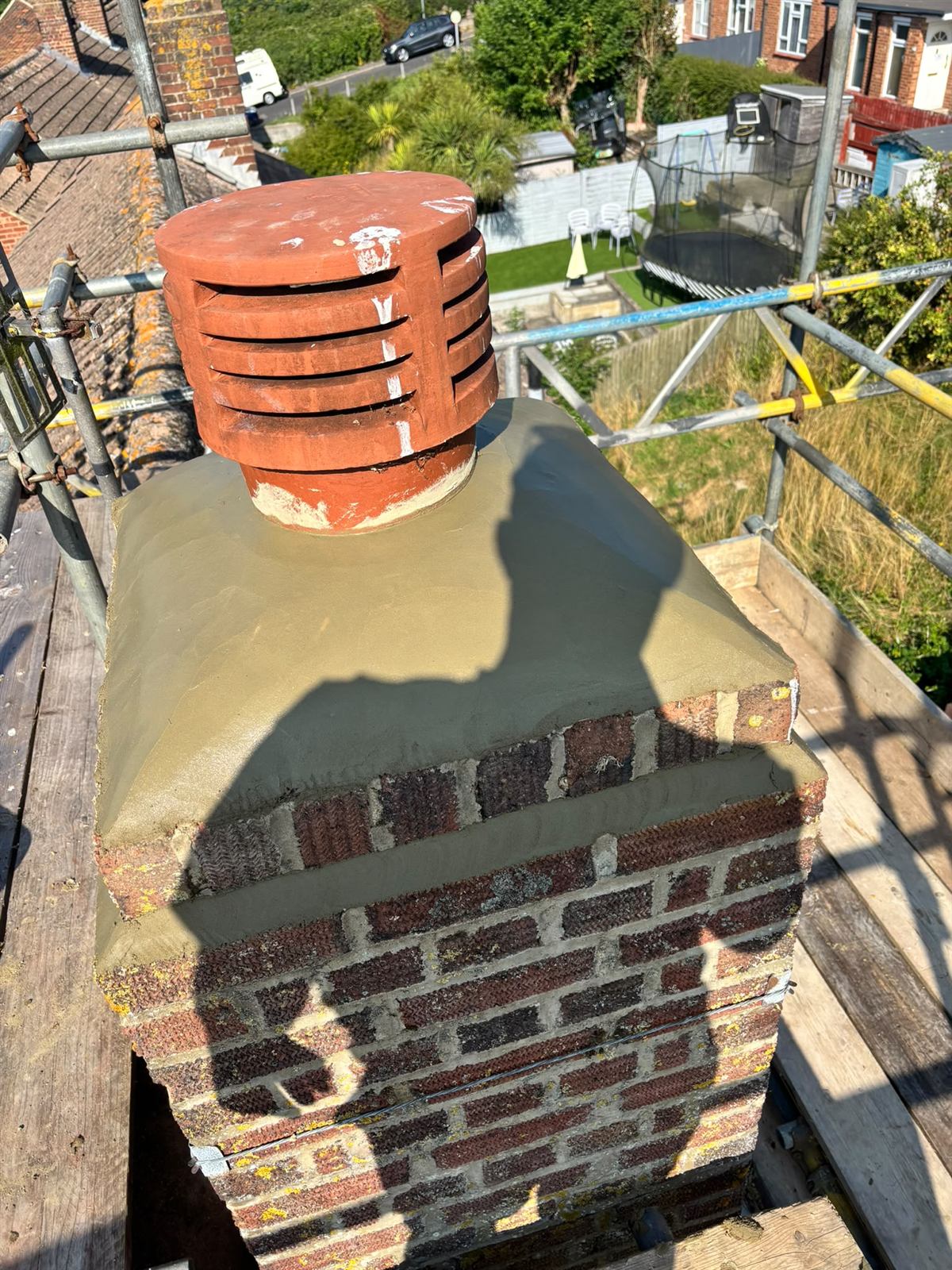
A chimney stack stands proud of the roof in wind, rain and frost, so mortar erodes, flaunching cracks and pots work loose. Where the stack meets the roof, lead flashings and soakers keep the water out, until they split, slip or lose their pointing.
We repair stacks, rebuild them when they’re past saving and take redundant ones down. And we do leadwork the traditional way, dressed to shape by hand, on chimneys, valleys, dormers and bay roofs.
Chimney and lead work
Repointing and rebuilds
Eroded mortar raked out and repointed. Unstable stacks taken down and rebuilt to match.
Flaunching, pots and cowls
Cracked flaunching renewed, pots re-bedded, and cowls or caps fitted to keep rain and birds out.
Chimney removal
Redundant stacks taken down and roofed over neatly. If breasts are coming out inside, we make sure they’re properly supported and signed off.
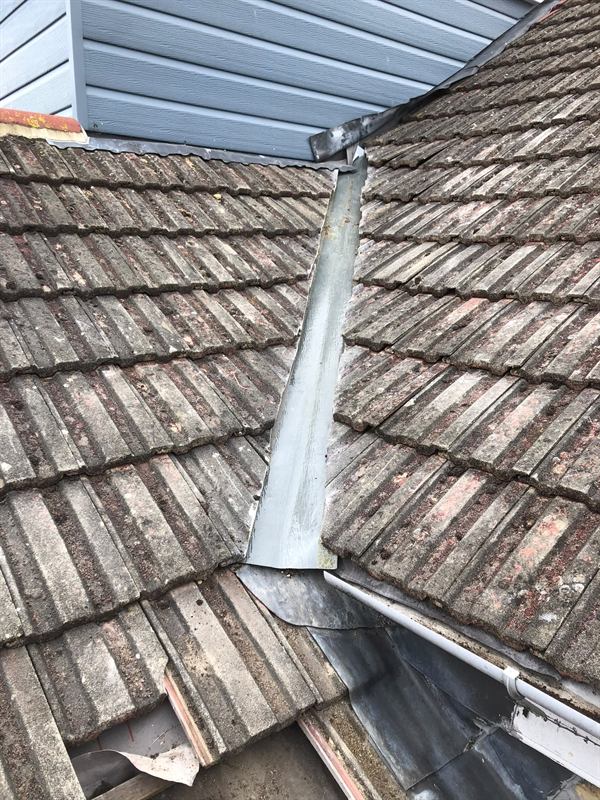
Lead flashings and soakers
Stepped flashings, aprons and back gutters dressed to shape in rolled lead.
Lead valleys and bay roofs
Valleys relined and traditional lead bay roofs on period homes.
Heritage leadwork
Work suited to listed buildings and conservation areas, using matching methods.
Signs of chimney or flashing trouble
- Damp on the chimney breast or upper walls
- Bits of brick or mortar in the gutter
- A stack that leans, or pots that rock
- Cracked flaunching around the pots
- Stains or gaps around the lead flashing
- Daylight around the stack in the loft
What affects the cost
- Access: most chimney work needs scaffold or a chimney access platform.
- Repair, rebuild or removal.
- Matching bricks and mortar on period stacks.
- Amount and thickness of lead needed.
Free written estimates, with photos of the stack before we start.
Chimneys & leadwork: your questions
Why does my chimney leak when it isn’t raining hard?
Often it’s the flashing, or the brickwork soaking up rain and releasing it slowly. It can also be condensation in a capped flue with no ventilation. We check the flashings, pointing, flaunching and ventilation to find the real cause.
Should I remove my chimney?
If it’s unused, unstable and not part of the street’s character, taking it down below roof level can make sense. In a conservation area you may need permission first. Removing breasts inside needs proper structural support and Building Regulations sign-off.
Is lead still the best material?
For many flashings and valleys, yes. It lasts for decades and can be shaped to fit almost anything. Where theft is a risk, for example on hidden valleys or commercial roofs, there are good lead-alternative flashings.