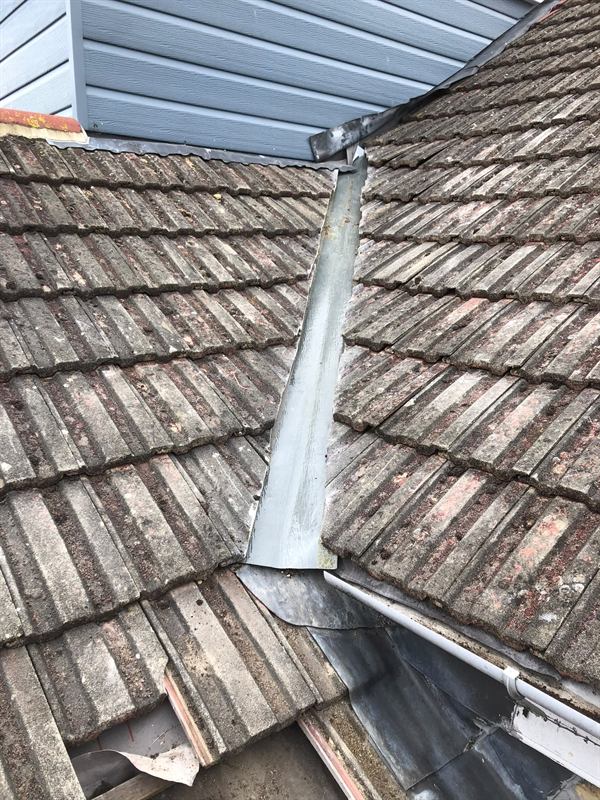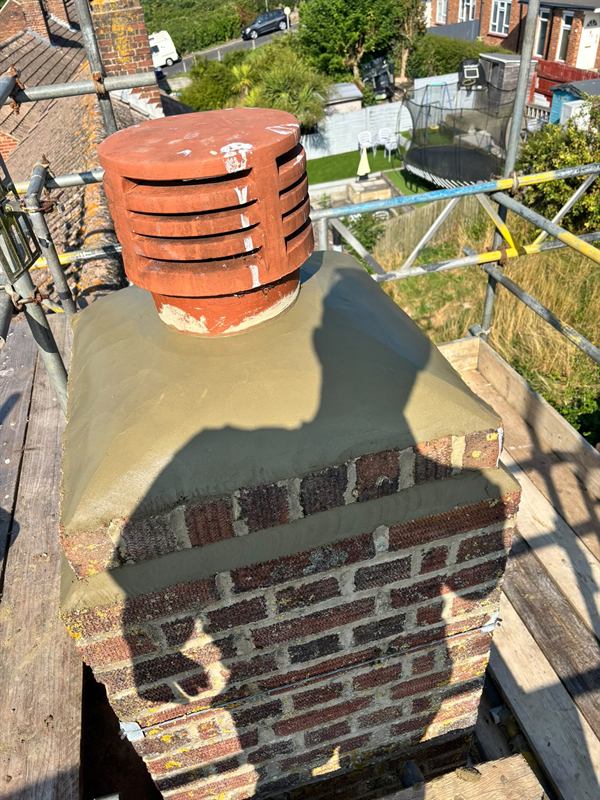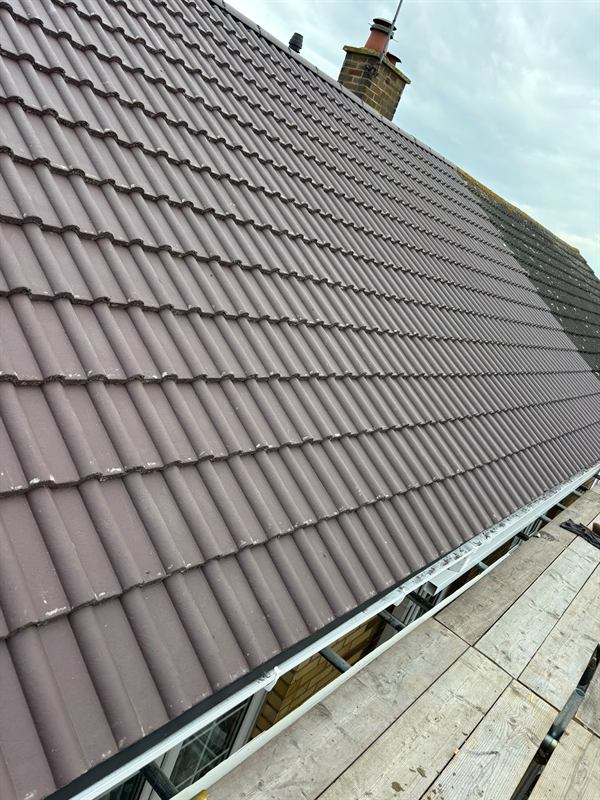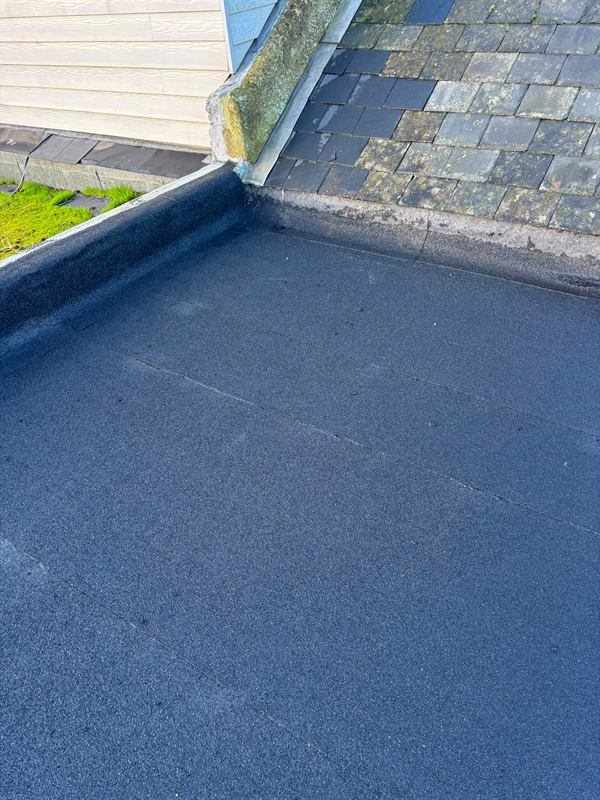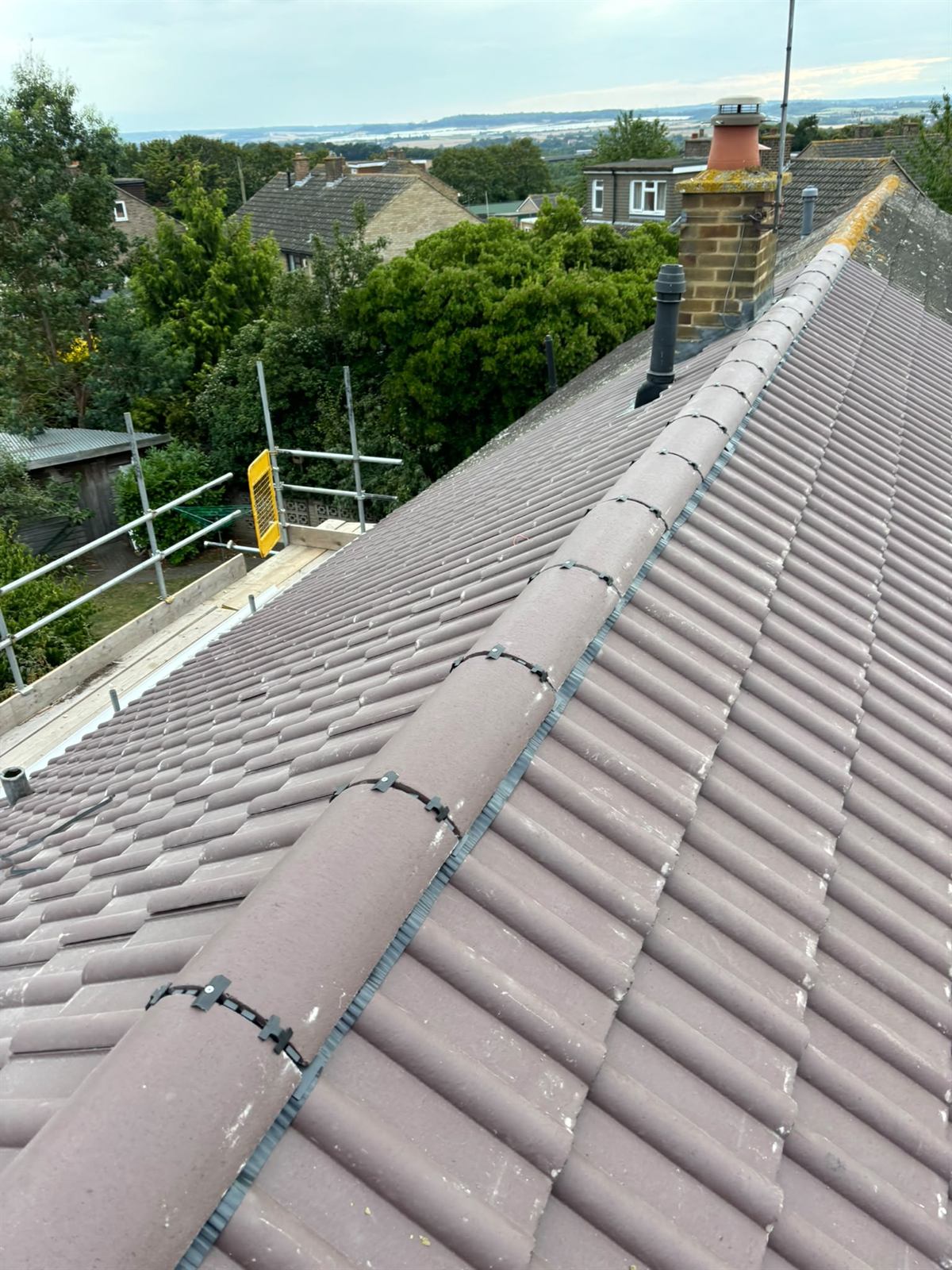
Re-roofing is the moment to fix everything you can’t see: rotten timbers, perished felt, missing ventilation and ridges held on by tired mortar. Done well, it’s a job you won’t think about again for decades.
Kent has a bit of everything, from handmade peg tiles on Wealden farmhouses and oasts to slate on Victorian terraces and concrete tiles on post-war estates. We’ll recommend what suits your house, your street and your budget.
What a new roof includes
Strip and inspect
Old coverings off and every rafter checked. Rot, sag or woodworm is put right before anything goes back on.
Breathable membrane and treated battens
Modern underlay so the roof can breathe, and graded, treated battens set to the right gauge so the tiles sit true.
Clay and Kent peg tiles
Handmade and machine-made clay tiles for period homes, conservation areas and oasts, with sound originals reused where possible.
Natural slate
Welsh and Spanish slate for Victorian terraces and villas, nailed or hooked.
Concrete interlocking tiles
Cost-effective and quick to lay. Ideal for post-war and modern homes.
Dry ridge and dry verge
Mechanically fixed systems that don’t rely on mortar, so storms can’t wash them out.
Ventilation and insulation
Eaves and ridge ventilation, and insulation upgrades where Building Regulations call for them.
How a re-roof runs
- 01
Survey and written quote
We inspect, photograph and measure, then quote in writing with the materials specified.
- 02
Scaffold and protection
Scaffold, sheeting and skips arranged, and the house and garden protected.
- 03
Strip and repair
Old roof off, timbers repaired, new membrane and battens on, the same day the roof is opened.
- 04
Tile, ridge and flash
Tiles or slates laid, ridges, verges and flashings fixed, and roofline renewed if included.
- 05
Clean up and sign-off
Site cleared and magnet-swept for nails, final photos and Building Regulations sign-off.
What affects the cost
- Roof size and shape: hips, valleys, dormers and bays all add work.
- Material: concrete tile, clay, handmade peg tile or natural slate.
- Scaffold, and whether chimneys need work at the same time.
- Replacing fascias, soffits and guttering while the scaffold is up.
Every re-roof is quoted after a survey, in writing, with the materials named.
New roofs & re-roofing: your questions
How long does a re-roof take?
Most houses take one to two weeks on site once the scaffold is up, depending on size and weather. Bigger or more complex roofs take longer. You’ll get a realistic schedule with your quote.
Do I need planning permission?
Like-for-like re-roofing usually doesn’t need planning permission, but changing materials on a listed building or in a conservation area can. Re-covering more than a quarter of a roof normally needs Building Regulations sign-off. We’ll tell you what applies before we start.
Can you keep my old tiles?
Often, yes. Sound clay tiles and slates can be taken off carefully, sorted and re-laid, topped up with matching reclaimed ones. It keeps the character, especially in conservation areas.
Which tile is best for my house?
Usually the one the house was built with. Slate suits most Victorian terraces, clay or peg tiles suit older and Wealden houses, and concrete tiles suit most post-war homes. We’ll talk you through the options and the costs.